Countries of the World - Culture
Spain

 Culture -

 Culture -

 Culture -

Hola amigos,

Here I am putting together some slides and historical facts about Spain, and in the process enjoying the best asset we got...the Sun..well yes, that gives us a huge revenue from the 60 plus million tourists a year that come to our nation.

Spain is not all about bullfights, fandango,siestas, flamenco or paellas, the country got lots to see and there are places that are never mention to the tourists...our secret..which of course they are much more interesting than what you can usually see..well that applies everywhere I guess, but if you go from Madrid to the North you will be surprised at the beauty and unspoiled sceneries but of course from Madrid to the South the wheather is the great asset..so come and see for yourself, our hospitality is second to none and we are very proud of our heritage our culture and of being Spanish of course. Hasta la Vista
Prehistorical Times
The oldest historical findings made in Spain date of about 30000 to 50000 b.C. Among the most important remains of this period are the caves Cova Negra (Játiva) and Piñar (Granada).

The Celt-Iberian Spain
The Iberian population probably arrived to the peninsula from the north of Africa. Tartessos, probably an iberian tribe, founded an important kingdom of high culture in the valley of Guadalquivir river, in the south of Spain. By 1200 b.C. Celtic tribes entered the peninsula from the north, mixing up with Iberians and so generating the celt-iberian race,Celtic typical round stone huts remains still can be seen some Centic fortifications ruins called castros in Galicia autonomous area in NorthWest Spain. The origin of the Vasque race living in the north of the country is uncertain, but many historians suppose that it goes back to a pre-iberian population.

Phoenicians, Greeks and Carthaginians
By 1100 b.C. Phoenicians arrived to the peninsula and founded colonies, the most important of which was Gadir (today's Cadiz). Also Greeks founded colonies in southern Spain and along the Mediterranean coast.
During the Punic Wars between Rome and Carthago Carthaginians invaded Spain and conquered large parts of it. Their most important colonies were the island Ibiza and Cartagena, the "new Carthago".
Romans and Goths
After Rome had defeated Carthago definitely, Romans also invaded the colonies in Spain, and ended up conquering the entire peninsula. The province Hispania became part and parcel of Roman empire and acquired great importance, even two Roman emperors, Traian and Hadrian, were born there. Spaniards absorbed completely the Roman culture as still today is very evident in their language.
In 409, when the Roman empire started to fall, Gothic tribes invaded the peninsula and established their kingdom in 419.

Moorish Epoch and Reconquista
Gothic dominance lasted until 711, when Muslim armies crossed the Straight of Gibraltar and defeated Roderic, the last Visigoth king. Specially the southern parts of Spain, called al-Andalus, were prospering in the Moorish epoch, thanks to new sciences and agricultural technics. The Moors conquered major parts of the country until they were defeated for the first time by Visigoth king Pelayo at Covadonga in northern Spain, 722.
Though the small Christian kingdoms in the north were a nucleus of resistence, the Arabian culture was prospering in the rest of the country. The Muslim Spain by the time got politically independent of the Arabian empire, and in 10th century Abderraman III. made Al-Andalus his own caliphate. In this epoch Cordoba was the indisputable cultural center of this area of the world. Decadence started in 11th century, when the various Arabian noble families were more and more at variance among themselves, and al-Andalus broke into numerous small caliphates. The Christian kingdoms in the north started then the reconquest of Spain. The marriage between Isabel of Castilia and Ferdinand of Aragon in 1469, uniting the two most important among them, was the turning point of the Reconquista. From now on Muslims rapidly lost territory, until they were definitely expelled when they lost their last remaining caliphate, Granada, in 1492.

The Catholic Monarchs
Isabel and Ferdinand succeeded in uniting the whole country under their crown, and their effort to "re-christianize" Spain resulted in the Spanish Inquisition, when thousands of Jews and Moors who didn't want to convert to Christianism were expelled or killed.
After the discovery of America by Christopher Columbus in 1492 tons of gold and silver were brought in from the new continent, and Spain became one of the most powerful nations of this epoch called the Golden Age.

Habsburg and Borbon Kings
After Isabel died in 1504, her daughter Joan who was married with the German emperor's son Philip succeeded to the throne. Charles I., at the same time Austrian king and German emperor united in 1517 one of the largest empires in history. Anyhow after his retirement in 1556 it was split between the Spanish and the Austrian line of Habsburg family.
Spain was prospering economically under the Habsburg crown thanks to the trade with its American colonies, but on the hand involved in wars with France, the Netherlands and England, culminating in the disastrous defeat of the "Invincible Armada" in 1588.
When the last Habsburg King Charles II. died without descendant, the nephew of French King Louis XIV., Philip of Borbon, successed to the throne. As a consequence of the French Revolution, Spain declared war on the new republic but was defeated. Napoleon took the power in France and sent his troops against Spain in 1808. He established his brother Joseph as Spanish king, but Spaniards fought a 5-year Independence War against the French. After Napoleon's definite defeat at Waterloo in 1815, Ferdinand VII. was restored to the Spanish throne and reigned with rigid absolutism. When he changed the law of succession to the throne and his daughter Isabel was established as queen, his brother Charles rebelled against it and the War of Seven Years broke out. Economical recession and political instability were the consequences, Spain lost its colonies with the exceptions of Puerto Rico, Cuba and Philippines. The revolution of 1868 forced Isabel II. to renounce to the throne, and the First Republic was proclaimed. Anyhow, it lasted for just about one year. After a coup d'état Isabel's son, Alphonse XII., restored the kingdom. The rebellion of Cuba in 1895 resulted in a war against United States, with disastrous results for Spain. It lost its last overseas possessions.

20th Century
The economical crisis of the early 1920s led the country to the brink of civil war, and General Primo de Ribera established a military dictature until 1930. Elections in 1931 saw a triumph for the political left, and Alphonse XIII. left the country. Increasing conflicts between the Republican government and the Nationalist opposition led to the Spanish Civil War (1936-39). The Nationalists, led by General Franco, received extensive support from Nazi-Germany and fascist Italy and succeeded against the Republican block which was officially supported only by Russia, although many intellectuals (as Ernest Hemingway) and politically committed from other countries fought in the International Brigades. The nationalists succeeded.
Although Franco kept Spain neutral during World War II, his military dictature led to political and economical isolation. During the 1950s and 60s every effort was taken to improve international relations, and the country's economy recovered. In 1969 Franco proclaimed Juan Carlos de Borbon, the grandson of Alphonse XIII., his successor with the title of king.
Franco died in 1975, and a constitutional monarchy was established. President Adolfo Suarez introduced important political reforms. When he surprisingly dismissed in 1981, a group of militars tried to take the power with a coup, but failed. In 1982 the socialist party won the elections and Felipe Gonzalez became president of the government. Spain became member of the NATO in 1985 and entered the European Community in 1986. In 1992 it appeared impressively at the world stage: Barcelona hosted the Olympic Games, Seville the world exposition EXPO'92, and Madrid was declared European Cultural Capital.

Not tired of reading y.. Culture -

Not tired of reading yet..well, glad to know that you are interested in my country, please proceed and contact if can be of help!!!
xavexo@myway.com -  Culture -

xavexo@myway.com
 Culture -

ANDALUCIA POPULAR FOLK MUSIC

Widely known for Flamenco music and dance, bull-fights, fantastic beaches and lots of sunshine, Spain has to offer much more than that. It is - and has been for thousands of years - one of the cultural centers of Europe. It has beautiful cities and towns, offering really old monuments as well as futuristic architecture. Its various regions are all different one to each other, geographically, climatically and even in personality. It is a fascinating country to know and to know more about it.

"Spain is different!", Spaniards use to say. They don't specify compared to what: to the rest of Europe, to the rest of the world, or even to itself ? We don't know it either, but we do our best to supply you with loads of information so you can find the answer to this question and to many more by yourself.


In the meantime if you wanna go to Spain and blast off with partytime animals there are places that do not sleep like Ibiza however, good planning is needed as the usually the German battalions of tourists there they take up the beachs early in the morning so you need to send your advance spotters to take position before day break and secure a spot.

Anyway there are many places where to enjoy as Spain is a country for good life and enjoyment and we Spainsh we are proud of our heritage and sharing with well intention foreigners and help them to blend in however, if you do not Speak Spanish even mumbling a bit, then you got to learn some so that the first stage blend in takes place...well if you wanna know more about our country night life here a link :

The N map is not for Nuclear.... but for other type of blast out, you can find almost anything here to get you going indifenetely in Spain, just need the Euros en the Stamina, if you wanna have a 24/7 party atmosphere just drop in Ibiza, Benidorn or Marbella, some North Europeans drop in for the week end and they dont even check in the hotels, the bars, night clubs, discoteques, ball rooms, restaurants etc are open 24 hrs for the purpose, in the beaches swimming gear is optional.

http://www.red2000.com/spain/n-map.html


OUTSIDE SPAIN BEST KNOWN FOLKLORICAL TRADITIONS


Best known among Spain's folkloristical traditions are certainly Flamenco and bullfights. Bullfights and events you will find them indeed throughout the country, the most popular event perhaps being the "Running of Bulls" during the Sanfermines in Pamplona. But bullfights are part and parcel of any Fiesta and the Spanish traditions since the time of the Romans when it was done "mano a mano" means only the bull and the bullfighter without anyting else than a piece of red cloth and a stick.

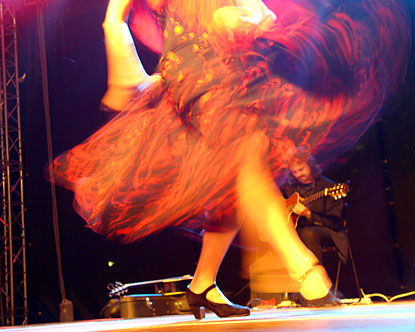
Flamenco, on the other hand, is the musical tradition in the country's south, in particular in Andalucia. That is where you have to move to see and listen first rate dancing and guitar playing. In April takes place Feria de Abril, in Seville, an entire week of singing and dancing and trying that great Sherry wine, those delicious tasty snacks called "Tapas" and more Sherry wine ... and if you like this sort of things you REALLY should not miss that event.
If you can arrange it (and find a hotel room) better arrive to Seville already two weeks before Feria, and see this city's other outstanding event: Semana Santa, Easter week, with its world-famous processions.
Another most popular event of religious origin is El Rocio, a traditional pilgimship to the village El Rocio in the province of Huelva, in May. This pilgrimship anyhow is not too solemn and serious, Flamenco and wine being indispensable components. Follow the thousands who each year travel there and have yourself a ball.

Another outstanding Fiesta are "Las Fallas de San José" in Valencia, in March, when all the city becomes the scenery of an enormous party with lots of good mood and excellent fireworks.
A wild week you can spend also in San Sebastian during February, when La Tamburrada takes place.
Madrid has its Fiesta, "San Isidro", in May. If you like bullfights, don't miss it.

Carnival is popular in all the country, the best is in Santa Cruz de Tenerife, but if you are at the peninsula, Cadiz and Sitges are the places to go.

Not so well known except for the Galic Nations e.g. Galicia, Scottland, Ireland, Welsh, etc. is the Galician Culture and Folklore (Galicia is an autonomous nation in North West Spain)

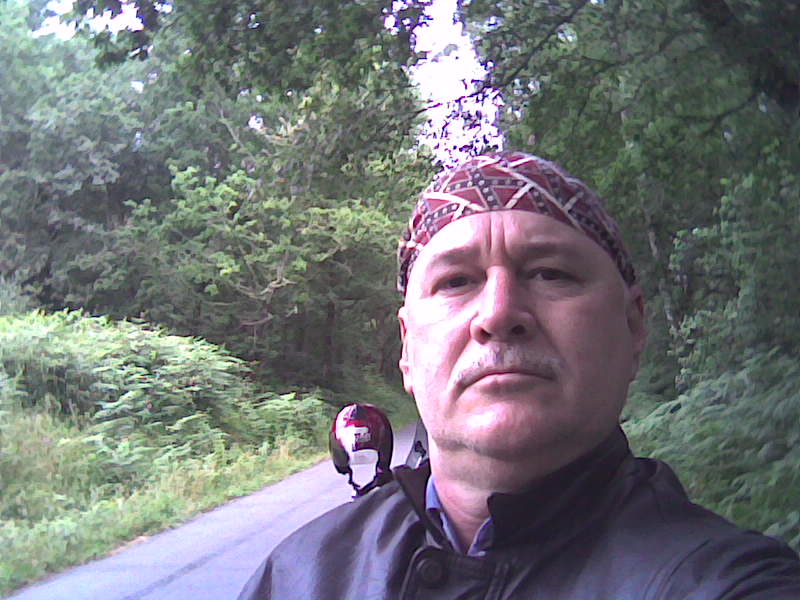
ME AND AND MY IRON HOR.. Culture -

ME AND AND MY IRON HORSE
CORDOBA OLD ISLAMIC SP.. Culture -

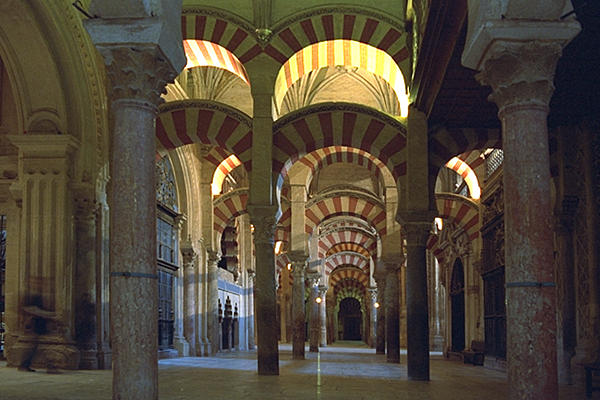
CORDOBA OLD ISLAMIC SPAIN PERIOD MOSQUE
RURAL GALICIA -  Culture -

RURAL GALICIA
Own Design and Build H.. Culture -

Own Design and Build Hut
Flamenco Dance -  Culture -

Flamenco Dance
Santiago de Compostela.. Culture -

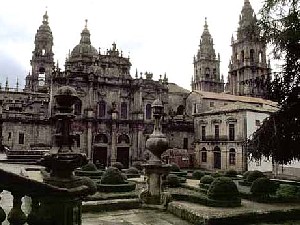
Santiago de Compostela Cathedral where Saint James is Buried
The festival (Fiesta) .. Culture -

The festival (Fiesta) in honour of San Fermín celebrated in Pamplona -los Sanfermines- is a mixture of the official and the popular, the religious and the profane, for local people and outsiders, the old and the new, order and chaos. And all of this packed into one long week starting with a bang at midday on the sixth of July and ending with the nostalgia tinged with expectation at midnight on the fourteenth.

The San Fermines have always been a special festival but when Pamplona was still a small unknown city -provincial and clerical- the San Fermines found their most fervent supporter in the American writer Hemingway.

The Sanfermines offer the visitor an open and hospitable festival where anything out of the ordinary is welcomed and soon becomes part of the tradition, so long as ¡t shows the respect due to others. The Sanfermines is a fiesta where no one is an outsider, everyone is equal and in which the festive spirit is never broken, centred around the people of Pamplona in the widest sense: all the people in the city during the always too short 204 hours of revelry, dancing, prayers and bacchanalian extravagance.


It shouldn't be forgotten that the Sanfermines is a festival of religious origins and that this aspect is still relived in huge demonstrations such as the Procession on the morning of the seventh. But the religious celebration is in perfect harmony with the cult of the bull -a symbolic animal- and with the cult of Bacchus, the god of wine -a drink which ¡s no less symbolic. The Sanfermines are, in short, a total, absolute and radical festival in which the people of Pamplona play the leading part, but in which outsiders feel immediately at home -there's no question of being a mere onlooker- as for nine days Pamplona becomes the world capital of happiness.

 Culture -

Me and the Lexus GS 43.. Culture -

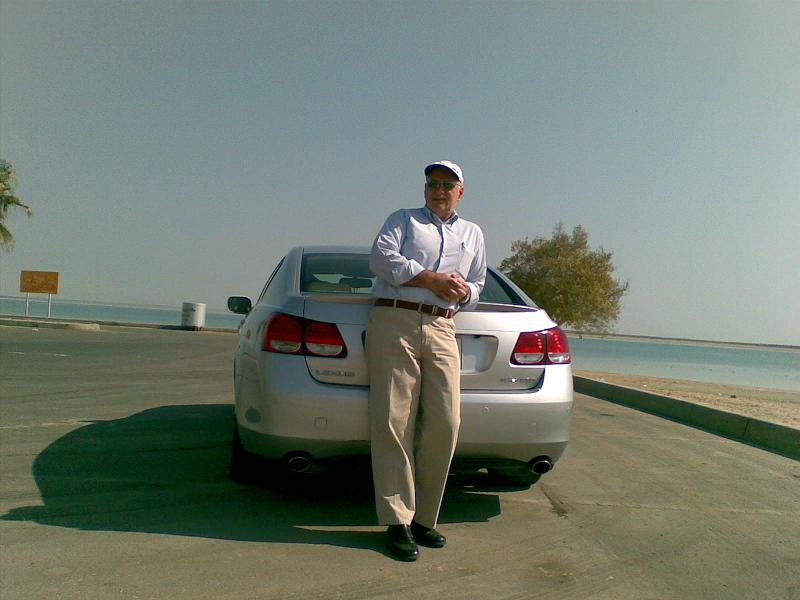
Me and the Lexus GS 430 TTI, it beats the BMW blues...
MY OLD TIMER JAG AND I.. Culture -

MY OLD TIMER JAG AND I IN THE SANABRIA GLACIER LAKE
ME AND MY GUZZI 1100i .. Culture -

ME AND MY GUZZI 1100i IN THE GALICIA MOUNTAIN ROADS
ME AND MY GROUP THE VA.. Culture -

ME AND MY GROUP THE VAL DO ULLA RIDERS FROM...ULLA VALLEY OF COURSE AIN'T BETTER


Create your own website!
Spain (Countries of the World - Culture)    -    Author : Anxo - Spain
3489 visitors since 2007-01-23
last update : 2009-09-09

Blog-City.info >> Countries of the World >> Blog #1575
Blog-City.info
Find penpals
Students of the World : Penpals for kids

Google
 
website author area
Password :